3D-Printed RC Car
- Design tool
- Fusion 360
- Manufacturing
- 3D printing
- Materials
- PLA / PETG
- Motor
- 6500KV
- ESC
- 80A
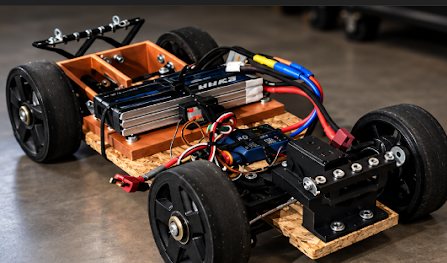
Overview
I designed and built a fully functional RC car using Fusion 360 and 3D printing. The project involved developing custom functional and aesthetic components, assembling the vehicle, and conducting repeated testing to evaluate and improve its performance.
Most of the vehicle was designed specifically for 3D printing, allowing me to rapidly prototype, evaluate, and modify components throughout development.
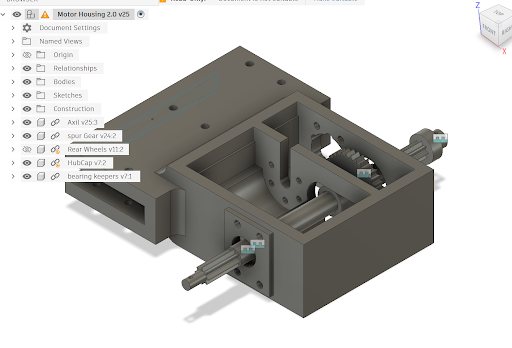
Design & CAD
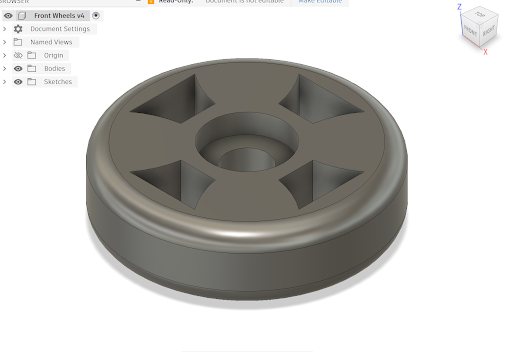
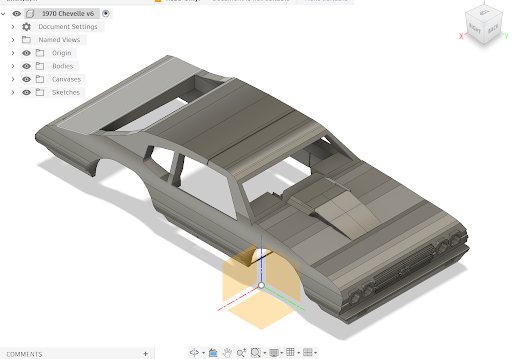
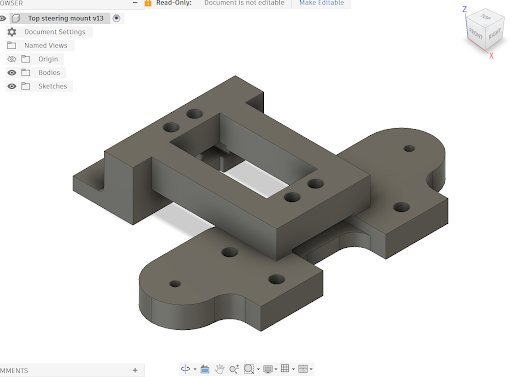
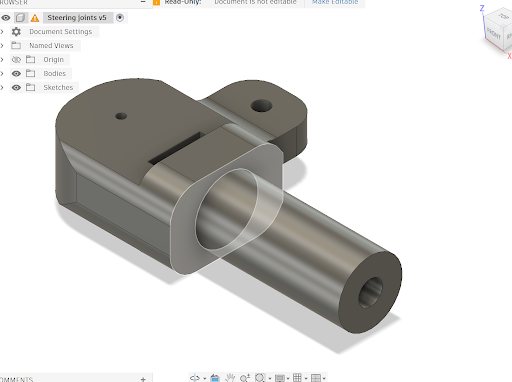
Fusion 360 was used extensively throughout the design process. I modeled the vehicle’s components from the ground up, designing parts around the requirements of the drivetrain, electronics, and 3D-printing process.
I developed multiple versions of components and refined the designs based on their performance during physical testing. This iterative process helped me identify weaknesses in the original designs and develop more effective solutions.
Manufacturing
I manufactured the majority of the custom components using 3D printing. PLA and PETG were selected for different parts based on their intended application and material requirements.
The project required adjusting both part designs and print settings as manufacturing challenges arose. This created an ongoing cycle of design, manufacturing, testing, and improvement.
Testing
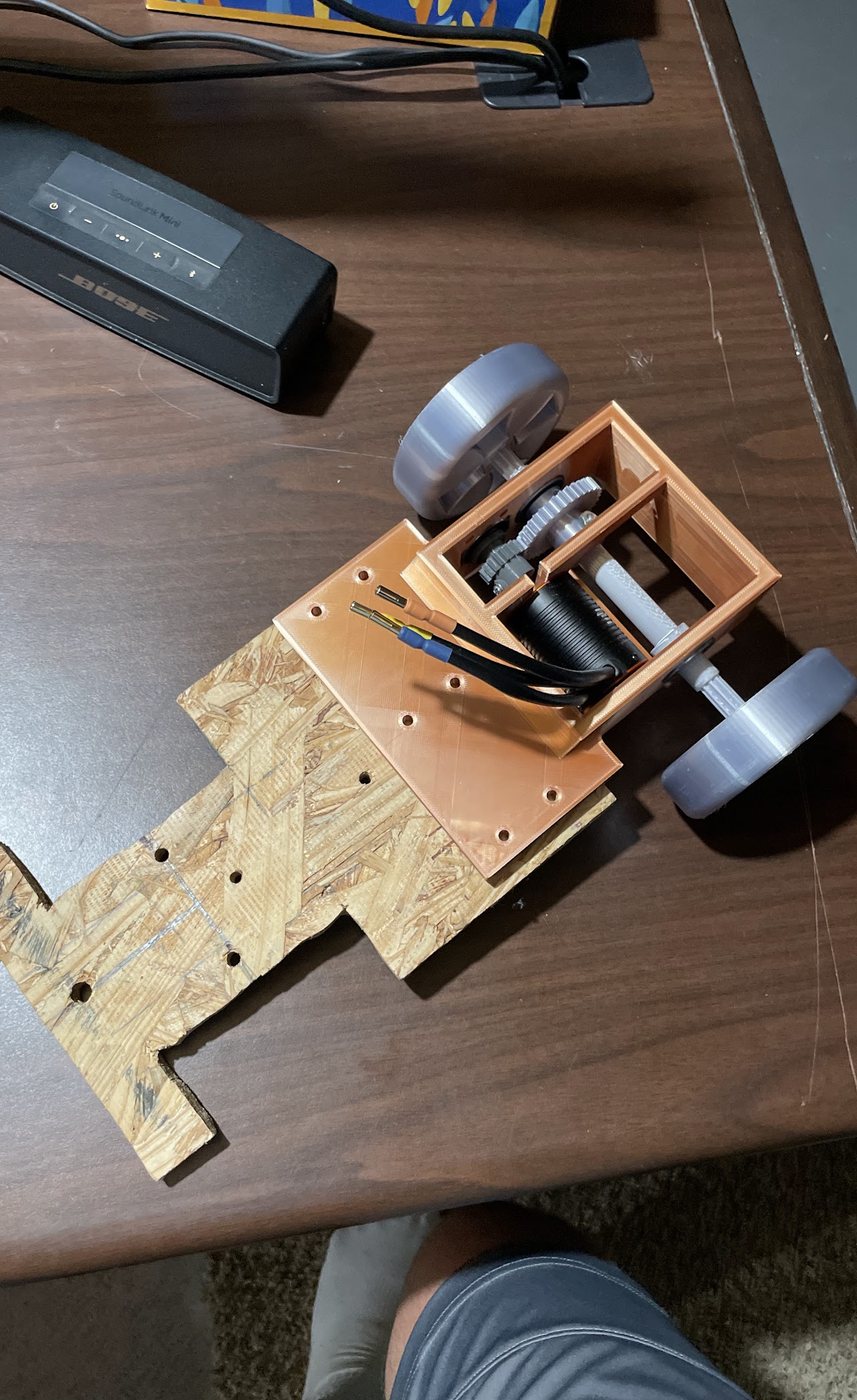
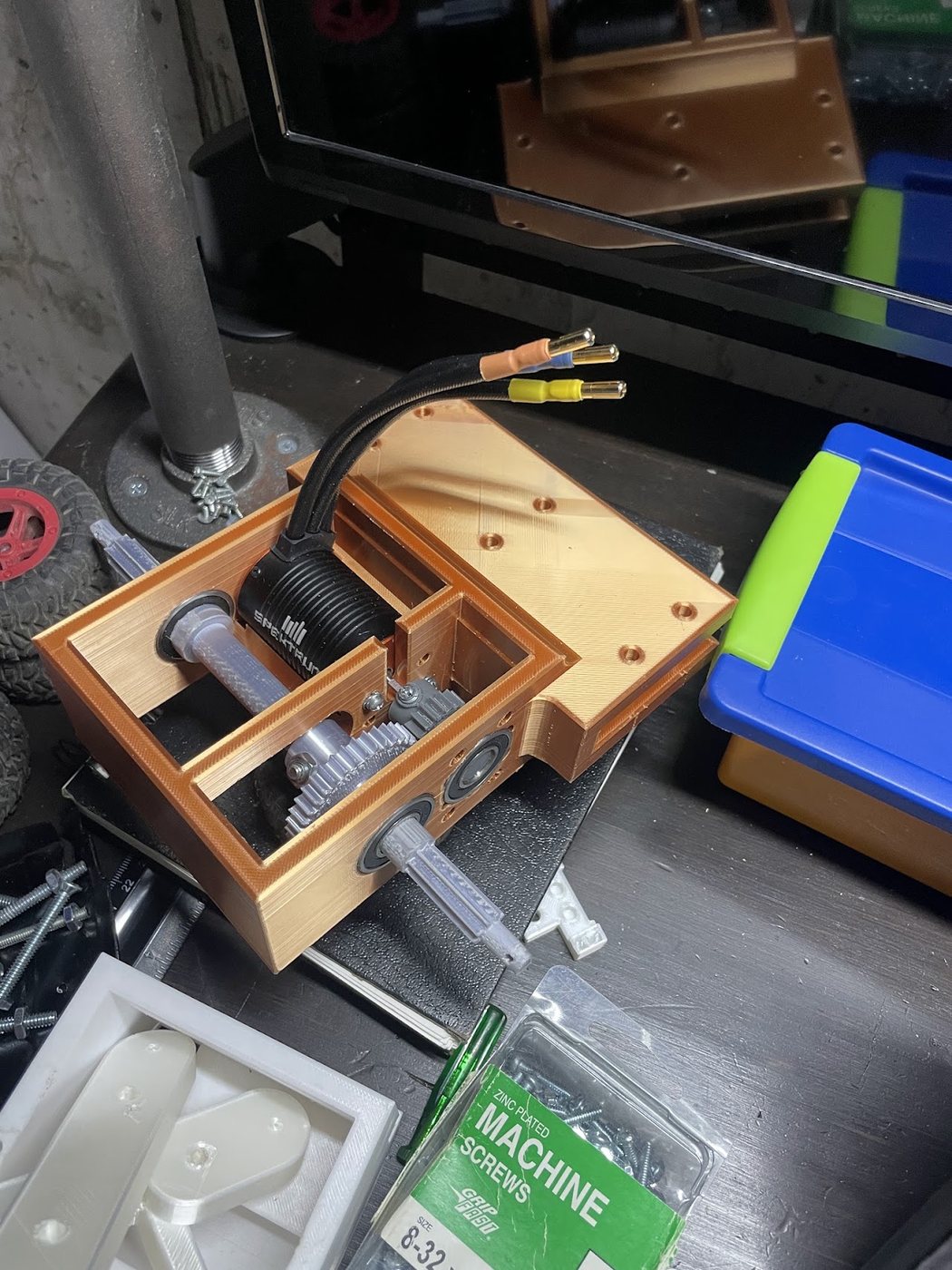
Testing revealed several areas where the original designs needed improvement. I used these results to identify weaknesses, modify components, and produce improved prototypes.
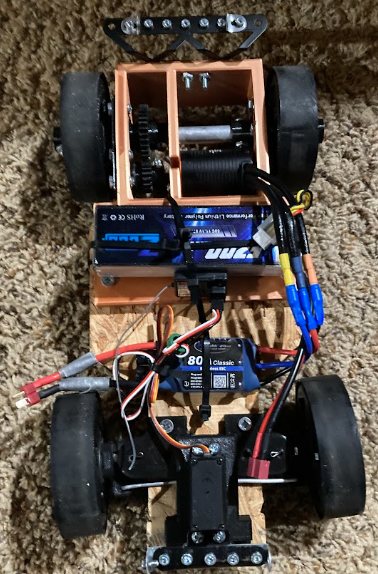
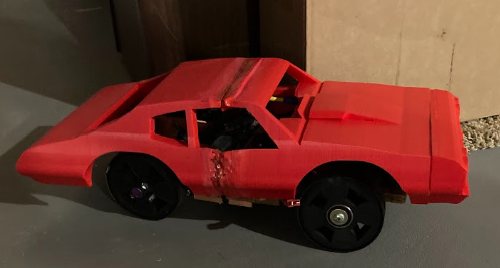
After several months of testing and redesign, I completed a vehicle that met my original design criteria and improved significantly over the initial prototype. The redesign addressed issues involving torque, weight distribution, and durability.
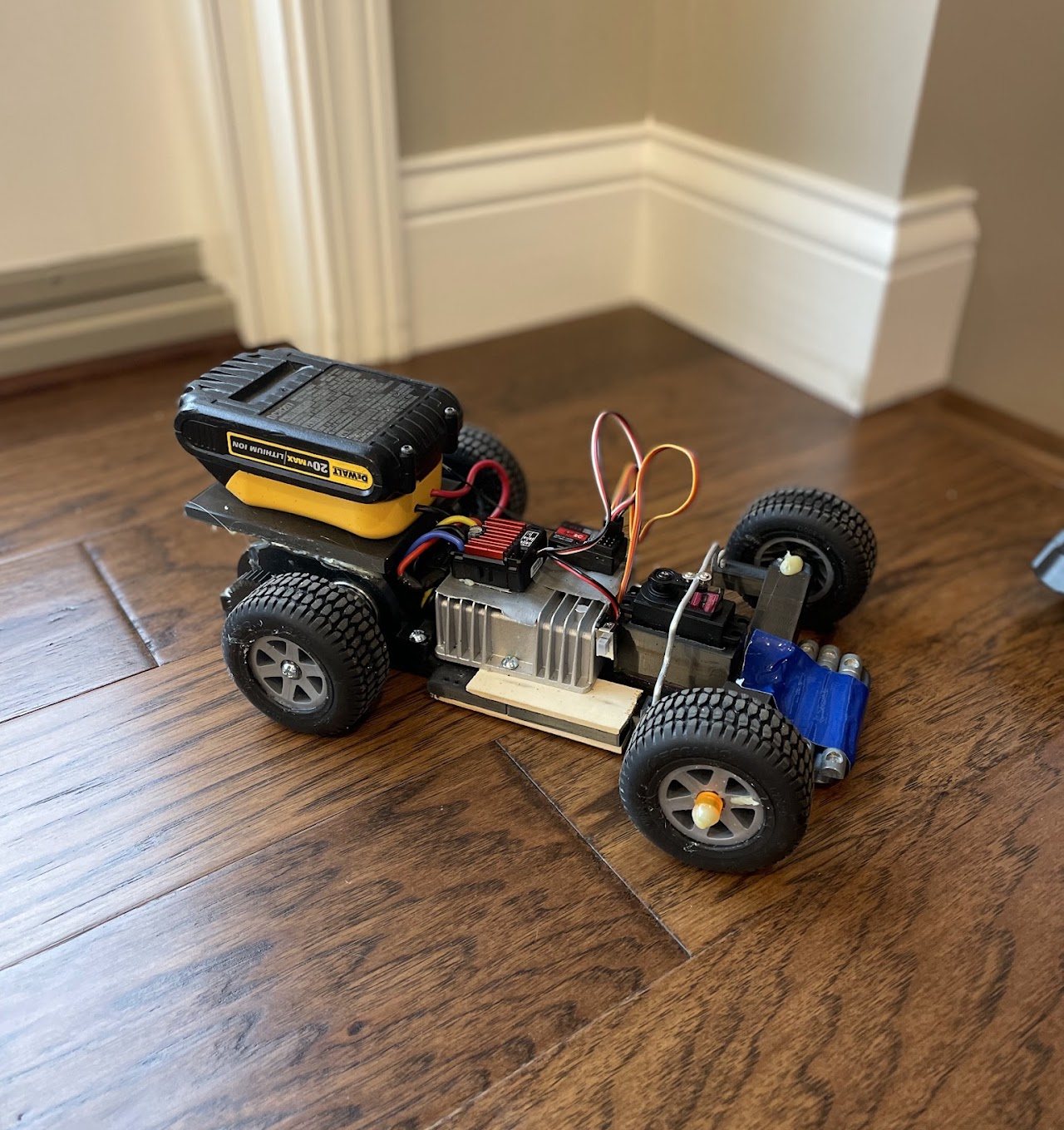
This was my original prototype which had many shortcomings including low torque, poor weight distribution, and terrible durability
Final Result
Shortcomings
Although the final design represented a substantial improvement over the initial prototype, testing also revealed limitations in the drivetrain and electrical system.
The vehicle’s torque-to-weight ratio was higher than intended, causing the car to lose traction and spin out before reaching half throttle. Additionally, the 80A electronic speed controller (ESC) was not adequately suited to the demands of the 6500KV motor. The resulting overheating significantly reduced driving time.
These challenges highlighted the importance of matching motor, ESC, gearing, and vehicle weight during drivetrain design. They also reinforced the value of physical testing in identifying issues that may not be apparent in a CAD model.