Overview
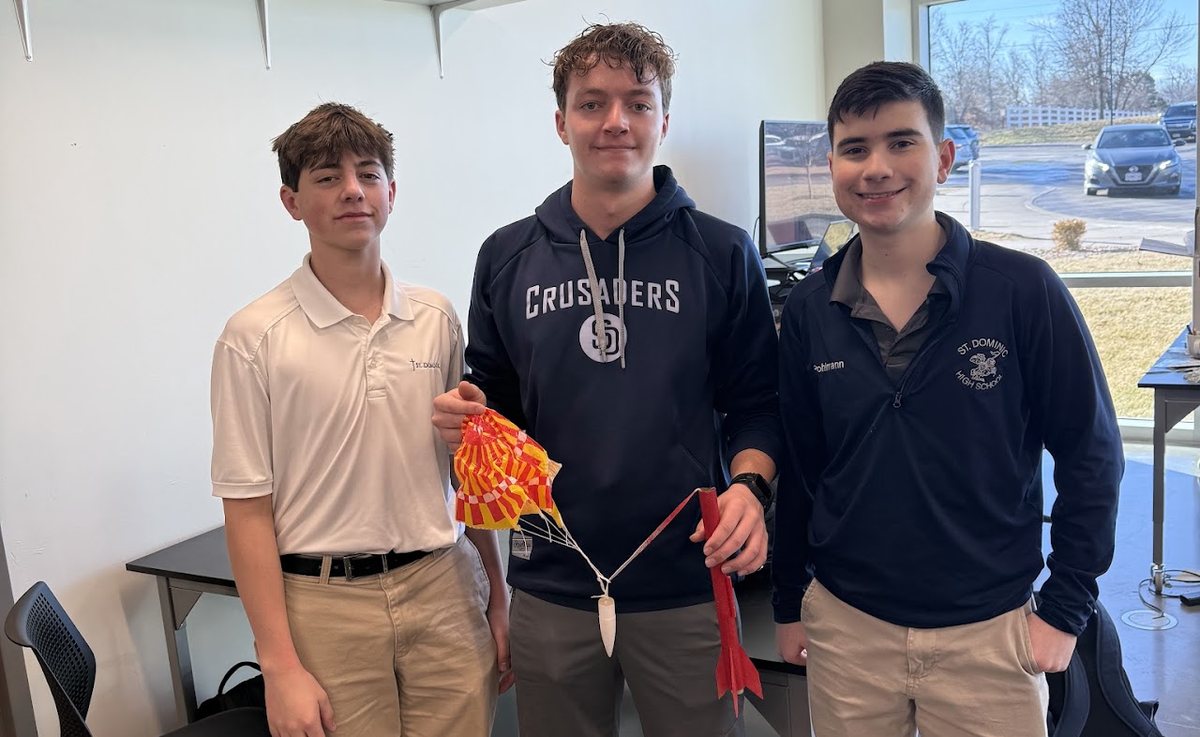
As part of my Aerospace Engineering PLTW class, I designed and built an operational model rocket while learning about flight principles, stability, and structural construction.
This project gave me experience applying aerospace concepts through design, simulation, fabrication, and flight testing.
Design & Simulations
My team designed the rocket using the provided AERY software, which served as a digital model and simulation tool. We used the software to predict the rocket’s maximum altitude and velocity and evaluate its expected performance.
After our simulated results met and exceeded the project requirements, we proceeded with physical construction and prototyping.
Prototype & Launch
During construction, one of our primary challenges was manufacturing the rocket’s wooden fins. Each fin needed to be uniform in shape and properly aligned to maintain stability during flight.
Inconsistent fin geometry or alignment could cause the rocket to deviate from its intended flight path and reduce its maximum altitude. After completing the prototype, our team conducted a successful launch and recovery using a parachute recovery system.
Second Launch
Following our successful first flight, we prepared the rocket for a second launch without conducting a thorough post-flight inspection.
During the second launch, the engine mounting bracket had loosened during the first flight. This allowed the engine to move out of its intended position, resulting in a structural failure of the rocket.
Shortcomings
This experience highlighted the importance of post-test inspections, fastener security, and maintenance between repeated test cycles. A more thorough inspection after the first flight could have identified the loosened mounting bracket and provided an opportunity to correct the issue before the second launch.
The project reinforced the importance of treating every test as a source of engineering information and incorporating inspection and maintenance procedures into the design process.